North Dakota State University
NDSU Extension Service
Kenneth Hellevang, Ph.D., Professional
Engineer
North Dakota State University Extension Service
Noreen Thomas
Flood Recovery Education
Specialist
North Dakota State University Extension Service/
University of
Minnesota Extension Service
Keep Your Home Healthy
Indoor air quality is important. We breathe about 5,000 gallons of air daily. Indoor air can be more polluted than outdoor air, even in large industrialized cities. We spend 90% of our time indoors. Especially at risk are infants and the elderly, who spend almost all of their time indoors. Indoor pollution can be as serious as carbon monoxide poisoning, which can be life threatening. Excessive moisture inside the home can contribute to indoor air contamination.
Testing of indoor air quality in your home is very expensive and usually not practical. It's best to focus on changes you can take to reduce your exposure to indoor pollutants.
Heat
Recovery Ventilation
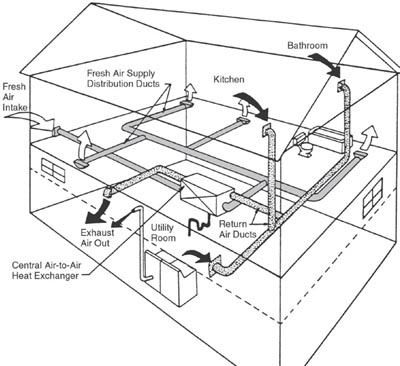
Ventilation can be provided by natural airflow through doors and windows. A heat exchanger (heat or energy recovery ventilation) is an efficient and economical way to have air exchanged and yet reduce heating and cooling costs. Heat exchangers require maintenance to be efficient and effective.
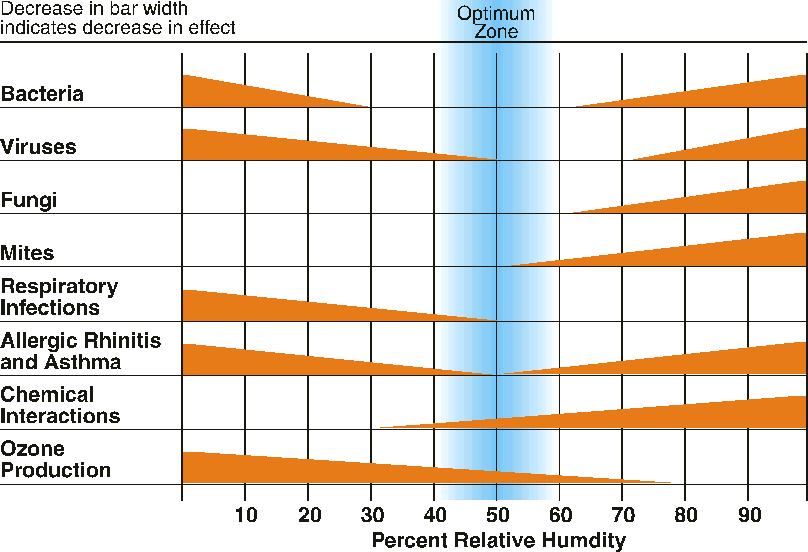
Optimum Relative Humidity
Moisture levels need to be monitored. Too much moisture can cause damage to a home and affect health. Molds and viruses multiply with too much moisture in the home.
At low relative humidity, incidents of respiratory
infections and allergic rhinitis increase. Other concerns of low humidity are
static electricity, damage to furniture and musical instruments, and dry
skin.
Controlling Excess Moisture
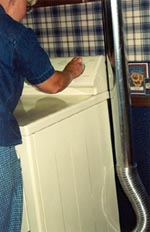
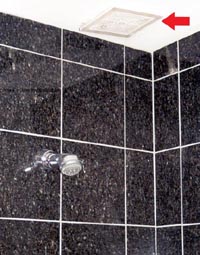
People produce 3 pints of water per day just breathing. Other sources of moisture include cooking, cleaning and taking showers. About one pint of moisture comes from a 10-minute shower. Moisture coming from basement walls and floors can be up to 100 pints per day with wet soil.
Removing Moisture
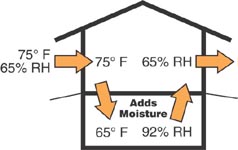
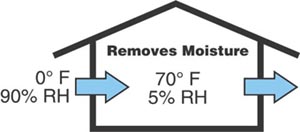
Relative humidity is the amount of moisture in the air relative to the amount it can hold. Cold air can hold very little moisture, so even at 90% RH there is little moisture in the air. As the air is warmed, the amount of moisture it can hold increases and the RH decreases. Air at 0°F and 90% RH will have a RH of only 5% when warmed to 70°F. Since outside air is very dry during the winter, ventilating is the best way to remove moisture.
Summer ventilation may increase the humidity in a basement. Cooling air increases its relative humidity. Air at 75°F and 65% RH will have a relative humidity of about 90% if cooled to 65°F in a cool basement. A dehumidifier or air conditioner is recommended to reduce basement humidity during the summer.
Reduce Condensation
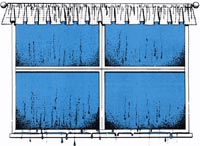
Even with energy efficient windows, relative humidity in the home or in one room can cause condensation on windows. Prolonged moisture from condensation can damage the window by rotting wood around the window and lead to mold growth. Reduce condensation by keeping the indoor humidity level below 40% in winter. You can reduce window condensation by adding an additional layer, such as plastic, which warms the window surface. This is similar to dressing in layers.
Dehumidifiers generally only lower humidity to about 50% so dehumidifiers are not adequate for limiting condensation during the winter.
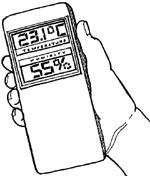
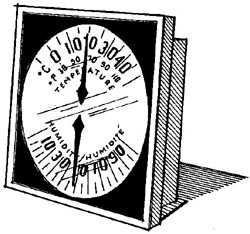
Hygrometer
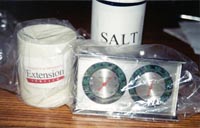
Hygrometers measure relative humidity but are often not accurate. Some can be as much as 20% off. Electronic digital units tend to be more accurate. To calibrate, place the hygrometer in a sealed plastic bag with a mixture of ¼ cup table salt and ½ cup water for 12 hours. The gauge should read 75% humidity.
Health Effects of Mold
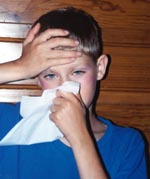
If you smell a musty odor or see mold, you have a problem. You can have your home tested for mold, but it is very expensive and is not necessary if a problem is observed. Just use your own senses of sight and smell to identify if you have a mold problem.
Molds grow on organic materials, such as wallpaper, carpet, wood, Sheetrock and soap scum. Excessive moisture allows mold to grow rapidly. Mold must be removed since even dead mold can cause problems to our health. Some people are at higher risk for adverse reactions to mold.
Attic Ventilation
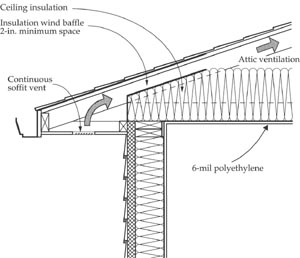
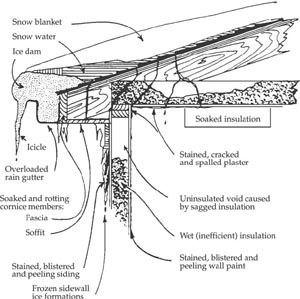
Poor or inadequate attic ventilation can lead to problems such as wet insulation, water-damaged ceilings, rotting wood and mold growth. Provide attic ventilation at the eave and the peak or ridge.
Ice Dams
Ice dams occur when escaping heat melts snow on the roof and the water freezes when it reaches the eaves. Reduce the potential for ice dams by providing adequate attic insulation and ventilation, and reducing any air paths from the living space to the attic.
Crawl Space
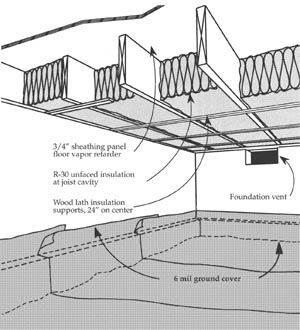
Crawl spaces and basements can be sources of moisture in a home. Moisture can move through the soil or porous concrete and into the home. Crawl spaces should have a vapor retarder on the soil that is sealed to the foundation. Otherwise, moisture in the crawl space can lead to mold growth.
Drainage
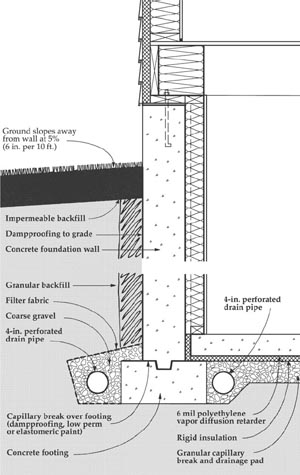
Controlling moisture by drainage is important. Install at least 6 inches of gravel underneath the basement concrete floor. This provides a water drainage layer and radon removal layer. Also, provide gradual ground slope away from the home and extend down spouts away from the house.

Control Mites
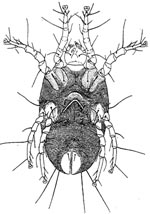
Moisture can affect indoor air quality by increasing dust mite populations. Dust mites are tiny creatures that feed on human skin cells that are shed every day. Some people allergic to dust mites will have symptoms such as a runny nose or watery eyes. Dust mites prefer moist environments and soft textures, including bedding, upholstery fabrics and carpeting. Mites do not normally live in the dry environment of a furnace or air-conditioning duct.
Humidifiers
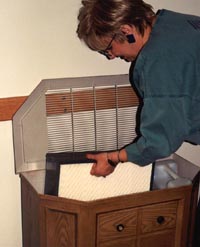
If not routinely cleaned, humidifiers blow microorganisms into the air. Reduce the possibility of contaminating the air you breathe by cleaning regularly according to the manufacturer's recommendations and rinsing well with water. Ultrasonic and impeller humidifiers may disperse minerals and other pollutants from the water into the air. Bacteria may be dispersed from dirty humidifiers.
Reduce Carbon Monoxide Risk
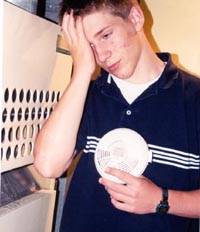
Carbon monoxide is deadly. It is an odorless, colorless gas. Symptoms are similar to the flu, with headache, dizziness or a sleepy feeling common. Every home should have a carbon monoxide detector if combustion heating (furnace or water heater) is used.
Radon Detector
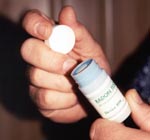
Radon is a colorless, odorless radioactive gas that increases the potential for lung cancer. The gas results from the natural decay of uranium and radium. It is found in low amounts worldwide. In North Dakota, 60% of tested homes had elevated levels in an EPA study. Elevated radon levels were found in 60% of the homes in the Red River Valley and 40% of homes in other Minnesota locations. Test your home for radon using a kit from a hardware store, the American Lung Association (http://www.lungusa.org/) or your local public health district. Send the canister to the lab indicated with the kit.
Air Cleaners
Evaluate:
The best method to reduce indoor pollutants is to remove the source, next is to dilute the pollutant through ventilation, then to remove some of the pollutant by using an air cleaner.
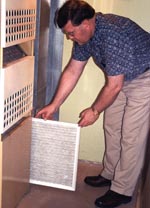
Air filters are the most effective and least costly method to remove particles in the air. Both the percentage of particles removed and the volume of air filtered must be considered in evaluating the effectiveness of air cleaners. They are not designed to remove gas such as radon or carbon monoxide. Units that produce ozone are not recommended.
Poor indoor air quality may affect health immediately or possibly years later (such as lung cancer). If you experience dizziness, fatigue, or irritations of the eyes, nose or throat, pay attention to the time and place symptoms occur. Note if the symptoms fade when you are away from home and recur once home. It is a good idea to improve air quality in your home even before sensitivity starts. Individuals have their specific sensitivity, which varies greatly from person to person. By taking simple preventive steps, you can keep your home healthy.
http://www.homemoisture.org/
www.montana.edu/wwwcxair
www.epa.gov/iaq/
Remove Mold for a Healthy Home -- NDSU Extension
Service, AE-1202
Cleaning Your Flooded or Water-Damaged Home -- NDSU
Extension Service Fact Sheet
Keep Your Home Healthy -- NDSU Extension
Service, AE-1204
"Keep Your Home Healthy" poster
This material is based upon work supported by the Cooperative State Research, Education and Extension Service, U.S. Dept. of Agriculture, under Project Award No. 00-4120-0936. Any opinions, findings, conclusions or recommendations expressed in this publication are those of the author(s) and do not necessarily reflect the view of the U.S. Dept. of Agriculture.
North Dakota State University and the University of Minnesota offer programs and facilities to all persons regardless of race, color, national origin, religion, sex, disability, age, Vietnam era veteran status or sexual orientation; and are an equal opportunity employer.